 NBC 60
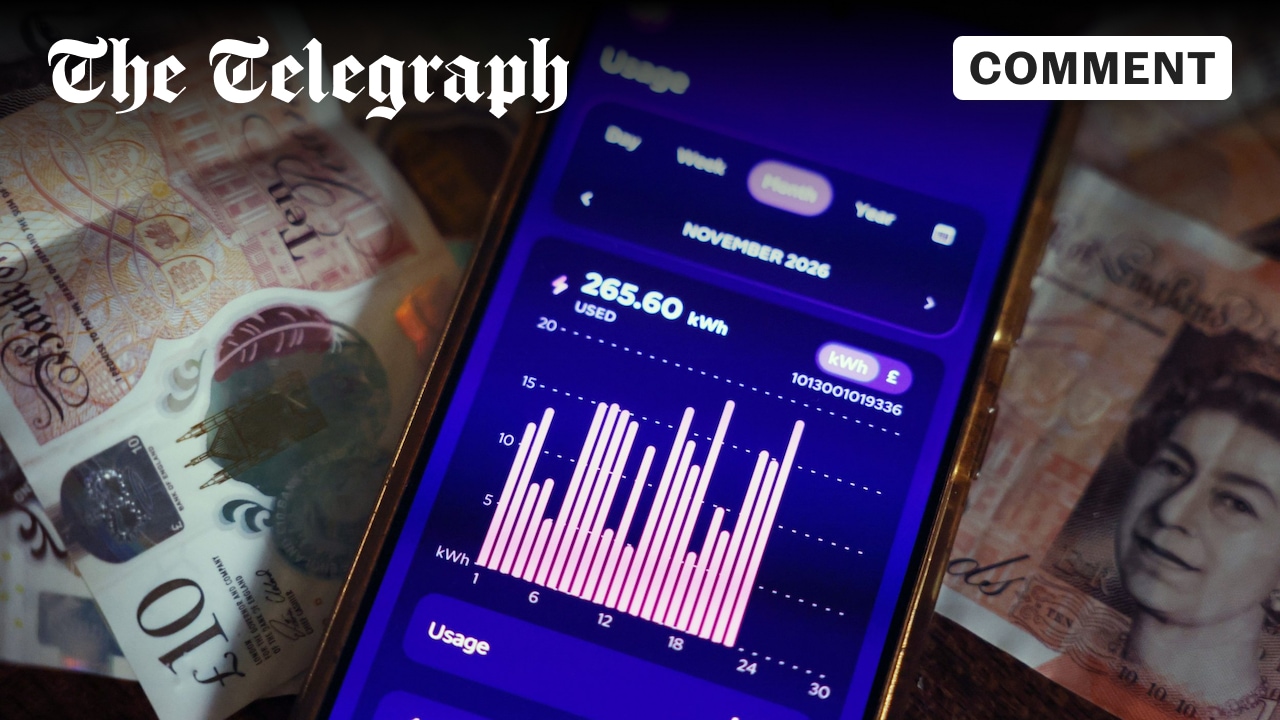
SIR – When he was energy secretary, Ed Miliband promised households savings of up to £300 a year on energy bills by 2030. Yet from January 2027, the typical annual bill will rise by 26 per cent to £2,166 (report, November 25) . A £100 winter payment is welcome, but it does little to offset an annual increase of £443.
Families need more than temporary help; they need to know when the investment in Britain’s net-zero energy infrastructure will translate into genuinely cheaper electricity. We hear much about targets, investment and the energy transition, but households pay their bills in pounds and pence, not promises. W J Morgan-Jones Tonyrefail, Glamorgan SIR – A 26 per cent rise in energy costs is unsustainable for the average British family.
The Government blames the wars in Ukraine and Iran for the increase, yet both are outside our country’s control. What is within our control is net zero policy, which results in higher domestic energy bills. What is the aim of this policy?
Well, if the UK reaches its legally binding target of net zero greenhouse gas emissions by 2050, the resulting reduction in global average temperature by 2100 is estimated at 0.0038C. On the assumption that current pricing is not acting as a welcome form of rationing, I’d argue that a serious government would announce the temporary suspension of net zero in the national interest. Simon Millar Worth Matravers, Dorset SIR – Running up ever-increasing debt in the name of going green, while burdening taxpayers, businesses and future generations, is economic folly.
The rest of the world must surely be watching with disbelief. Frankly, it is an embarrassment. Why are we deliberately leaving valuable oil and gas in the ground while importing energy from abroad and making ourselves poorer and less secure?
Why does the Prime Minister not permit Scotland to develop its own offshore resources, as we have done in the South Atlantic around the Falkland Islands? And why does the SNP not demand the right to exploit Scotland’s own natural wealth rather than endlessly complaining about Westminster? Scotland could produce energy, create jobs, generate tax revenues and strengthen national security.
The whole of the UK would benefit. There is nothing remotely sensible about impoverishing ourselves to achieve targets while the rest of the world carries on regardless. We should exploit our own resources, rebuild our prosperity and pursue the transition to cleaner energy from a position of economic strength – not national decline.
Christopher Allen North Berwick, East Lothian Get in touch: send a letter to dtletters@telegraph.co.uk The purpose of Pip SIR – Sir Stephen Timms, the social security minister, has found that the personal independence payment (Pip) system is “no longer fit for purpose” (report, November 25) . But what is its purpose? The Gov.uk website states that Pip “can help with extra living costs”, yet it is not means tested.
How does it assist someone who needs prompting to prepare a meal, or take food, or their medication – or needs support to understand complex written information or make budgeting decisions? How do you calculate the “extra living costs” associated with having autism, ADHD or depression? Surely access to funded support and therapies would be more beneficial than a cash payment, and successful claimants can still receive passported benefits.
Pip payments should be given to those who actually incur additional costs and do not have the means to cover them. In a caring society, individuals with physical or mental health problems should be helped to access the support they need. Pip payments should not be viewed as a form of compensation.
C McFall Crondall, Hampshire SIR – The conflicting findings of Alan Milburn and Sir Stephen Timms won’t faze Andy Burnham. He has a knack for telling opposing crowds entirely different things, leaving both certain that he’s on their side even though no one knows what he really believes. Christopher Healy Beverley, East Yorkshire Deterrence realities SIR – Your recent reporting on Britain’s war readiness and nuclear deterrent posture highlights a grave operational reality that cannot be solved by spending pledges for the 2030s alone.
When HMS Vengeance returned to Faslane after 217 days submerged – more than double the three-month deterrent patrol for which the Vanguard class was designed – official reaction bordered on celebration. Yet a seven-month patrol is not a triumph; it is a symptom of dockyard bottlenecks, delayed maintenance turnarounds and a stretched, ageing four-boat force. Pushing 140 sailors and their families beyond endurance guarantees early retirements, hollowing out the leadership and watchkeeping pool and deepening the Royal Navy’s submarine availability crisis.
Given this performance, Australia is increasingly concerned about Britain’s capacity to meet its obligations under the Aukus nuclear submarine treaty. I wrote to the Prime Minister in September warning that sustaining continuous at-sea deterrence at all costs was overwhelming operational judgment and risking a serious accident. Whitehall’s reply cited multi-year spending totals while ignoring patrol lengths.
Spending promises for the next decade will not relieve crews at sea today. Rear Admiral Peter Briggs (retd) Former Commander, Australian Submarine Squadron Mornington, Victoria, Australia Final destination SIR – The “Cemetery No Exit” sign (Letters, November 25) reminds me of one at Santiago airport in Cuba for departing passengers: “Last Waiting Room”. I survived, and went on months later to lunch at the Hotel Terminal in Italy, which turned out not to be.
Jeremy Burton Wokingham, Berkshire SIR – We were driving in Phuket, Thailand, when my wife saw a sign saying “House for Rant”, and suggested that I might like to drop in for one. John R M Prime Bedhampton, Hampshire Knife licensing SIR – You report (November 25) that under new plans all shopkeepers will need a licence to sell any type of knife. The cost and administrative burden of licensing almost every shop, from supermarkets to antique emporiums, would be considerable, but having done so the Government could build up a database of known knife-users.
Commander Stephen Clayman, the head of Britain’s new National Knife Crime Centre, might consider keeping DNA profiles for them, too. Alternatively, MPs could simply introduce mandatory registration on a national knife-user database – perhaps with a special category for those who own a butter knife. Robert Stratton-Brown Midhurst, West Sussex SIR – What about skewers, screwdrivers and knitting needles?
All are more suited for use as stabbing weapons than a typical table knife. P G Urben Kenilworth, Warwickshire Gatwick hack SIR – The hacking of Gatwick Airport’s AutoPay system (report, November 25) is the latest in a long line of security breaches in which customers’ financial and personal details have been compromised. The normal response is that customers should keep an eye out for suspicious activity in their bank accounts.
This is totally inadequate. We are forced to use these systems. It should be incumbent on providers to make sure that they are secure, and to offer significant compensation when they are proved not to be.
They can afford it. This year, Gatwick increased its drop-off charge from £7 to an exorbitant £10. Ian Rennardson Tunbridge Wells, Kent Two-way greet SIR – Regarding greetings (Letters, November 25) , what’s wrong with “How do you do?”, to which the answer is, of course, “How do you do?” No further discussion is warranted.
Martin Smith Brimpsfield, Gloucestershire SIR – When I ask after the health of someone my husband (who is not a doctor) has recently seen or visited, I dread the response: “Not over special”. On a number of occasions, the described has become the deceased within weeks – and once, within days. Gail Hall Maidstone, Kent Supporters’ misbehaviour during the haka Call to arms: New Zealand face their opponents in the 2023 Rugby World Cup Credit : Alamy SIR – Following on from the Welsh rugby team’s response to the New Zealand haka, England showed how to reply in a fitting way, accepting the Kiwis’ challenge (Sport, November 22) .
However, some in the crowd at Twickenham tried to drown out the haka by singing Swing Low, Sweet Chariot. I would point out that the challenge is laid down to the opposing team, not its baying supporters. Such behaviour is disrespectful and has no place in international sport.
Philip Lord Rossendale, Lancashire Remainers won’t rest until Britain rejoins SIR – After a great deal of thought, I voted to leave the EU in 2016, purely on the grounds of wishing to retain the sovereignty of Parliament. No one could know the economic effects, so, for me, they were not a consideration. Nor can anyone know what they may be in the future; the only relevant question was, and remains, whether or not we make our own laws.
I did not expect the Leave campaign to win, and was wholly prepared to embrace any democratic decision. However, had the result gone the other way, does anyone really think that we would be trying to re-run the vote now, a mere decade later (“PM ‘happy to let Brexit debate last for years’ ”, report, November 25) ? Moreover, if a future referendum were to decide that Britain should stay out of the EU, who believes that Remainers would not come back for a third go?
If it went their way then, of course, the question would be settled, with no chance of a fourth referendum, as that’s how Europe and Remainers work. Can’t we just leave this pernicious – and what we thought was settled – question alone? David Pearson Haworth, West Yorkshire SIR – Andy Burnham has opened the door to a second Brexit referendum.
Then he will open another door – to the polling station for 16-year-olds. They’re his ticket to a rejoin vote, and then a Labour victory at a general election. We are being played.
Kim Thonger Collyweston, Northamptonshire SIR – Nigel Farage (Commentary, November 25) is relishing the rerunning of the Brexit debate, as it provides him with a platform to make the same arguments we heard previously. As a Conservative, I support the Prime Minister’s efforts to forge closer relations with our largest trading partner. Donald Trump’s recent experience demonstrated that politics is governed by the economy.
Mess it up, and the electorate will punish you. This move is not about Brexit; it is about Britain’s economic future. Mark Peaker London W1 Letters to the Editor We accept letters by email and post.
Please include name, address, work and home telephone numbers. ADDRESS: 111 Buckingham Palace Road, London, SW1W 0DT EMAIL: dtletters@telegraph.co.uk FOLLOW: Telegraph Letters @LettersDesk
Source: The Telegraph